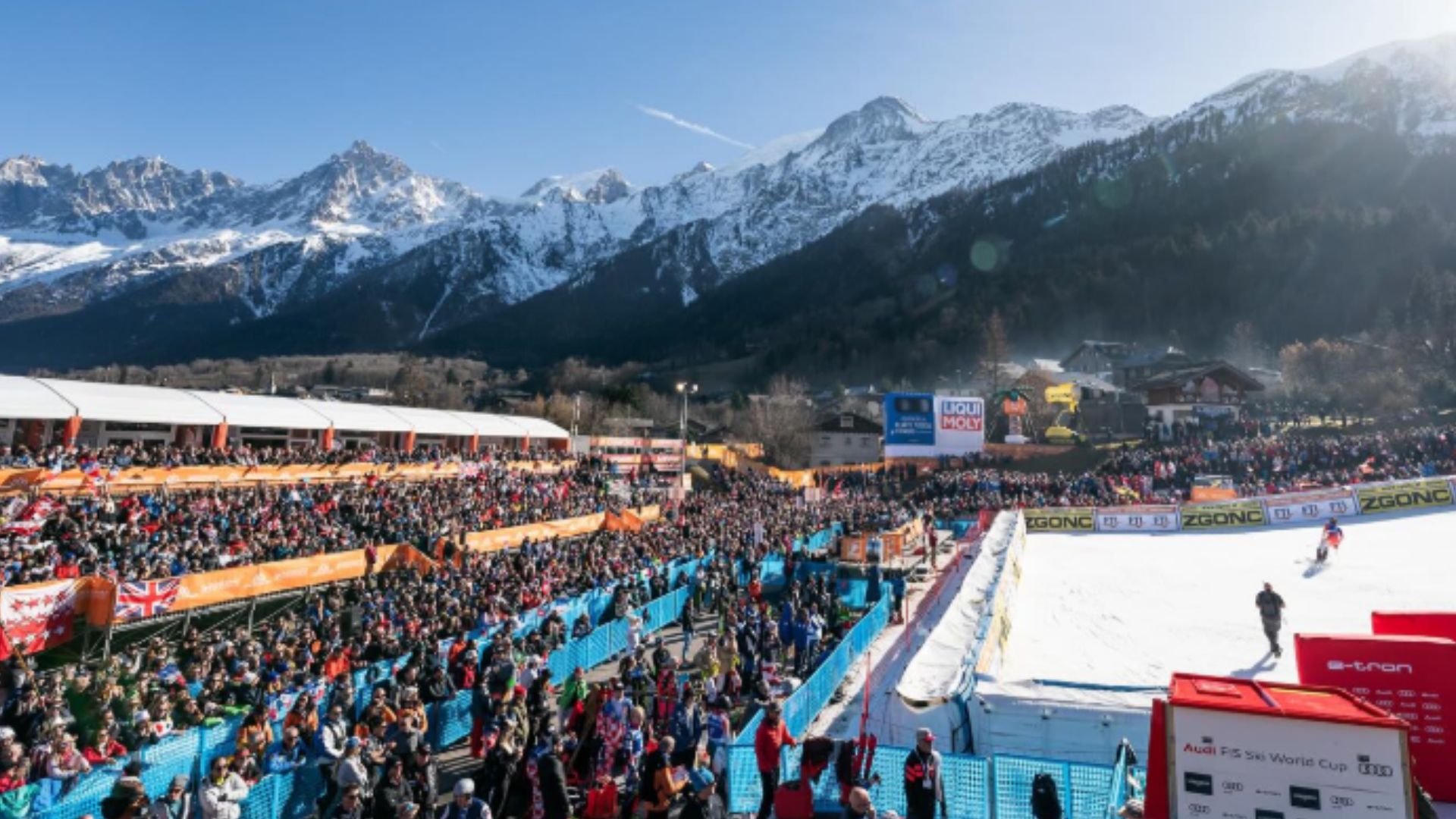
Every so often, the Chamonix valley closes ranks around a single stretch of snow. This coming January, it happens again: on the 30th, La Verte des Houches (one of the most storied runs in ski racing) hosts the Kandahar, as the men’s World Cup circuit returns to the valley for another chapter in a rivalry with the mountain that dates back nearly a century.
If you don’t race, the name might mean nothing. If you do, it means everything. And if you have been to Chamonix before you have most definitely heard of it!
Where the name actually comes from
The Kandahar isn’t named after a place in the Alps, it’s named after a British field marshal. Frederick Roberts, Earl of Kandahar, who funded an early ski race on the Plaine Morte Glacier in 1911, and when a young Arnold Lunn founded a British racing club in Mürren a decade later, he named it after the trophy Roberts had endowed: the Kandahar Ski Club.
Lunn spent the 1920s arguing, mostly to unimpressed continental federations, that downhill and slalom deserved to be raced together and taken seriously as competitive sport rather than a pastime for British tourists. In 1927 he met Hannes Schneider, the Austrian instructor who ran the rival Ski Club Arlberg in St. Anton, and the two men found they wanted the same thing. On the 3rd and 4th of March 1928, they staged the first Arlberg-Kandahar. The first international race to combine downhill and slalom into a single competition. It worked. Within two years, the FIS had adopted alpine events into its official program, and a discipline that barely existed a decade earlier had its first classic.
The race rotated between St. Anton, Mürren and Garmisch-Partenkirchen before Chamonix joined the circuit in March 1948, a natural fit for a valley that had already hosted the first Winter Olympics in 1924 and had spent the intervening decades building the cable cars and ski schools to match its terrain.

The event has run here on and off ever since, most often on La Verte des Houches: a black run that, despite its cheerful name, drops 870 vertical metres over 3.3 kilometres of narrow, tree-lined terrain that has humbled plenty of very good skiers. It hasn’t always run smoothly however. Warm winters have cancelled entire editions in recent years, most recently in 2024, but that fragility is part of why the valley cares so much when the race does go ahead.
What’s coming this January

The 2027 edition is set for January 30th: a Men’s Slalom World Cup on La Verte des Houches, drawing the full circus that follows the tour everywhere it goes. Athletes, national team staff, technicians, sponsors, and of course the following press.
Chamonix in late January is already a working ski town; and for one week, it also becomes a temporary operations base for a dozen national federations at once.
That’s the part people outside the sport rarely think about. A World Cup stop isn’t just a race day, it’s a week of course inspection, equipment prep, media obligations, and recovery, all happening in a valley with a finite number of beds and an enormous number of people who need one.
The case for a private base, not a hotel floor
We’ve hosted enough of these weeks now to know what actually matters to a team, a crew, or a production trying to work out of Chamonix under pressure. It isn’t the view (although the view helps). It’s control over the space.
A few reasons teams, crews and press keep choosing Amazon Creek over a scattered block of hotel rooms:
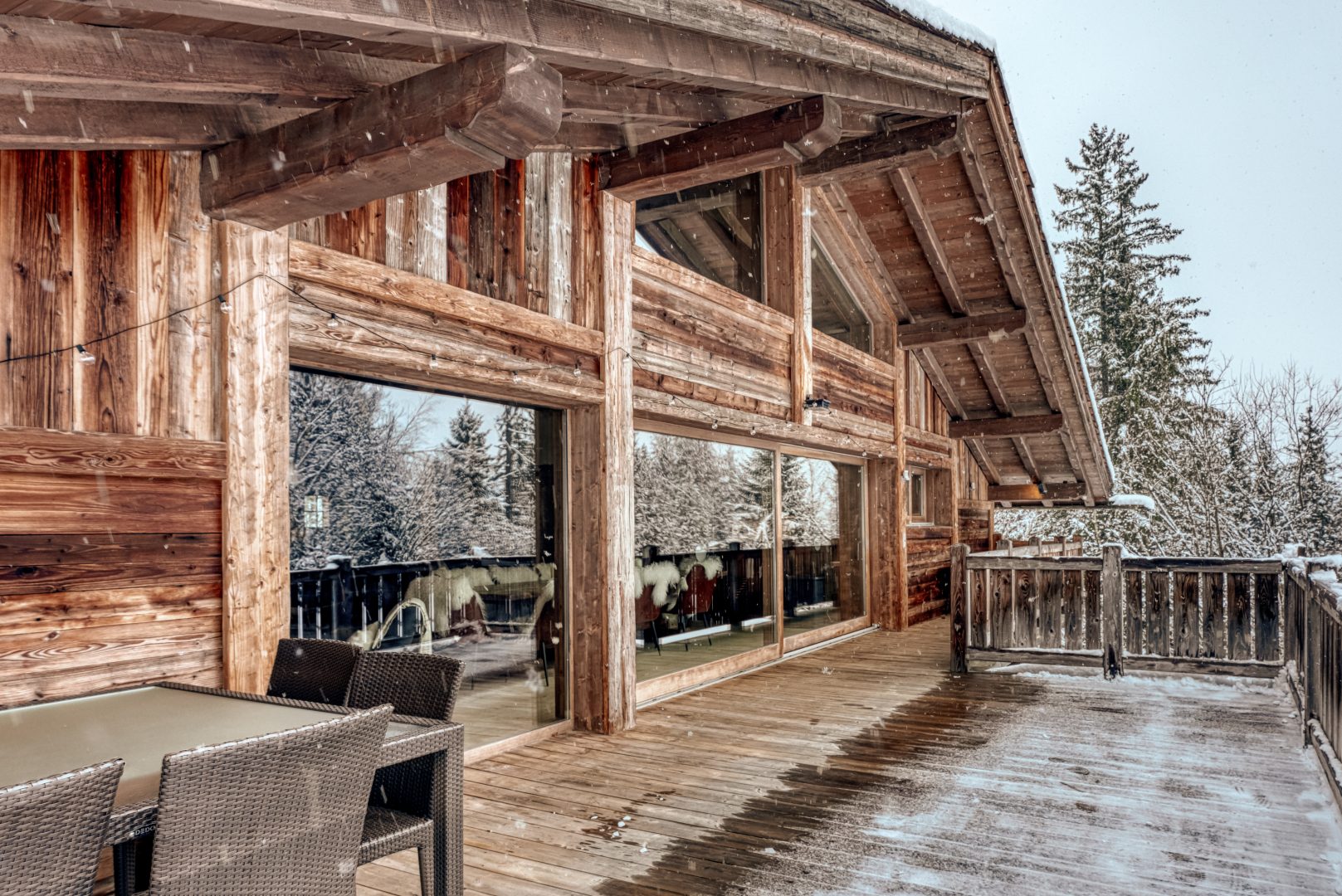
Proximity that saves time you don’t have during race week. Our chalets sit in the valley, minutes from Les Houches, which matters when a delayed start pushes every other commitment back by an hour.
Space that works as hard as you do. Rooms that convert into a debrief area for coaching staff, a production hub for a media team, or a quiet corner for an athlete who needs to be somewhere other than a hotel lobby the night before a start.
Recovery built in, not bolted on. A private gym, sauna and hammam mean an athlete’s post-race routine doesn’t depend on a spa booking or a shared facility’s opening hours.
One point of contact for everything. A single concierge and kitchen team handling meal timing, schedules and logistics for a full squad, rather than each person managing their own.
Privacy that’s actually private. A private hamlet of 3 chalets, not a corridor, when the last thing a team needs mid-competition is being recognised in a breakfast queue.


None of that is theoretical for us. We were the base The North Face used for their events during UTMB. The same valley, the same pressure to run a serious operation out of a private, well-equipped space rather than a conference hotel. It’s the same brief every time: give a team room to actually work, not just somewhere to sleep between commitments.
A week worth being properly based for
The Kandahar has survived cancelled editions, relocations, and nearly a hundred years of changing equipment and format, because the valley keeps making room for it.
This January, when the World Cup circuit comes back to La Verte des Houches, the teams, crews and press who’ll spend that week working the race deserve a base that matches the seriousness of the event itself.
If you’re planning your team’s stay for the 2027 Kandahar, we’d be glad to talk through what a private chalet base looks like for your group.